
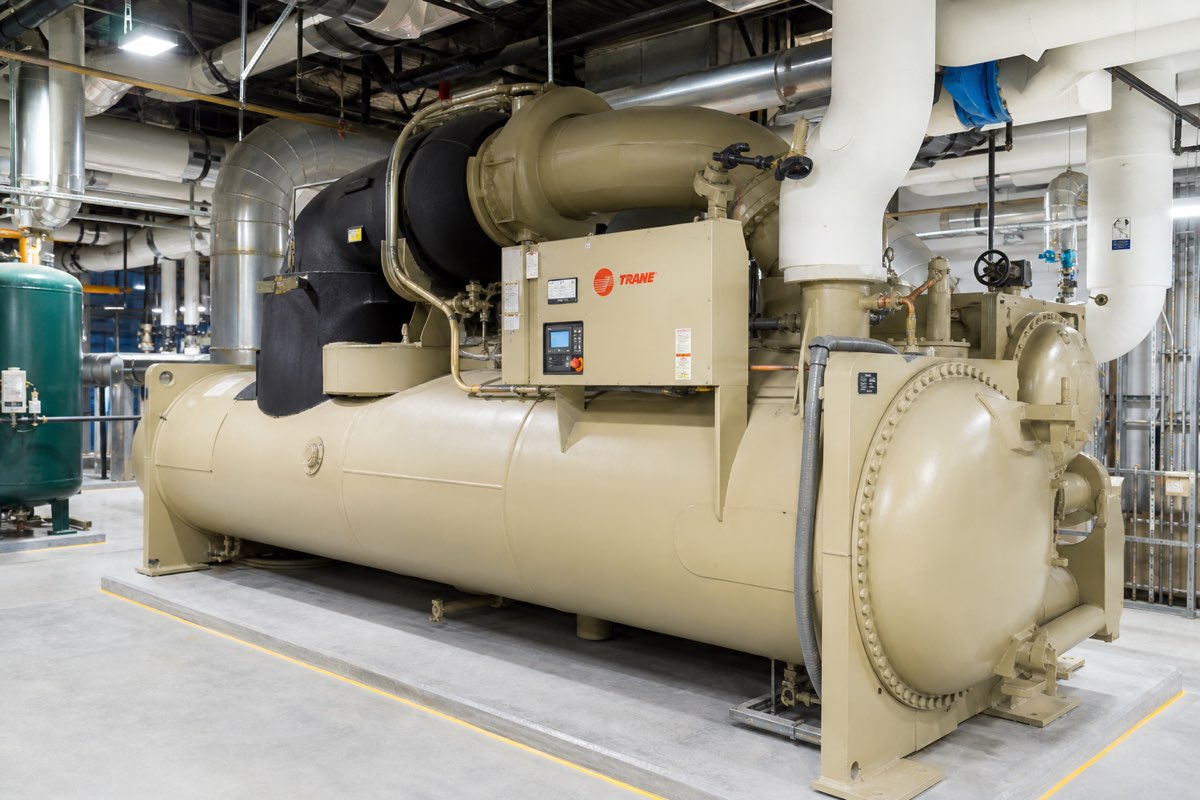
Water cooled chiller rental
When a central plant or a heavy process load needs temporary chilled water at high efficiency, a water cooled chiller is usually the right match. We route water cooled chiller rental requests to vetted providers carrying units that reject heat through a condenser water loop and a cooling tower, often supplied together as a package, for the larger tonnages that central plants and process facilities run.
By Industrial Rental Co Editorial Team Reviewed July 2026
- Higher efficiency than air cooled at larger process tonnages
- Requires condenser water and a cooling tower, often rented as a pair
- Sized for central plants and heavy, sustained process loads
- Sourced from insurance-verified third-party providers
Why water cooled rentals come as a system
A water cooled chiller does not reject heat on its own. It hands heat off to a condenser water loop, which carries it to a cooling tower where it is released through evaporation. That is why a water cooled rental is rarely a single drop: it is a system of chiller, condenser water pumps, a cooling tower, and the piping or hose that ties them together. Many providers supply the chiller and a matched rental tower as a package so the components are correctly paired.
The payoff for that added equipment is efficiency. Because a water cooled condenser runs cooler than an air cooled coil on a hot day, the chiller does less work per ton of cooling, which matters on large, sustained loads where energy use adds up. Telling providers your tonnage, chilled water and condenser water temperatures, and available space lets them scope the full system rather than just a box.
- Chiller plus condenser water pumps, cooling tower, and interconnecting piping
- Higher full-load efficiency than air cooled on large sustained loads
- Chiller and rental tower frequently supplied as a matched package
- Makeup water and treatment planned as part of the condenser loop
What a water cooled install needs on site
Because the system has more pieces, it asks more of the site. You need space for both the chiller and the cooling tower, a condenser water path between them, a makeup water source to replace what the tower evaporates, and a route for tower blowdown. Condenser water also needs treatment to control scale, corrosion, and biological growth, which protects both the rental equipment and your connected system.
Electrical capacity and tie-ins round out the scope. The chiller and pumps draw real power, and the connections back to your building loop have to be planned rather than improvised. Providers who place these systems regularly handle tower setup, water treatment, and rigging as part of the install, so sharing your utility constraints and footprint early keeps the project from stalling on a missing connection.
- Space for the chiller and a separately positioned cooling tower
- Makeup water supply and a blowdown path for the tower
- Condenser water treatment for scale, corrosion, and biological control
- Electrical capacity sized to the chiller and condenser water pumps
Common applications for rental water cooled chillers
Central plants are the classic case. Campuses, hospitals, and large commercial complexes run sizable chilled water plants, and when a permanent water cooled machine is down for overhaul or cannot meet peak demand, a rental water cooled chiller backstops the load at an efficiency that matches the building it serves. Heavy process cooling is the other major use, covering manufacturing and industrial loads that run continuously and reward the lower energy cost per ton.
These projects tend to be larger and more planned than a quick air cooled drop, which makes early engagement valuable. Because tower availability, freight, and rigging vary by region, requests route to multiple qualified providers rather than a single yard, and response times vary by location and provider availability. The more detail you share on load and site, the tighter the system match.
Common questions
When should I rent a water cooled chiller instead of air cooled?
Water cooled chillers make the most sense on larger, sustained loads where their higher efficiency meaningfully lowers energy cost, and at central plants already built around condenser water. They reject heat through a cooling tower rather than to ambient air, so they hold capacity better on hot days. The tradeoff is more equipment and a more involved setup. Air cooled units win when speed and simplicity matter more than peak efficiency.
Does a water cooled chiller rental include a cooling tower?
It usually needs one, and many providers supply the chiller and a matched rental cooling tower together as a package. The tower is where the condenser water actually sheds its heat, so the system does not function without it. Pairing the two from one source helps ensure the tower is correctly sized to the chiller. Confirm in your request whether you already have a usable tower or need the full system matched.
What does a water cooled install require on site?
You need space for both the chiller and the cooling tower, a condenser water loop connecting them, a makeup water source for tower evaporation, and a blowdown path. Condenser water treatment is also needed to control scale, corrosion, and biological growth. Electrical capacity has to be sized to the chiller and the condenser water pumps. Providers who place these systems handle tower setup, treatment, and tie-ins as part of the scope.
How large are rental water cooled chillers?
They are generally matched to larger tonnages than typical air cooled rentals because their efficiency advantage pays off most on big, continuous loads, and multiple units can be paralleled for very large plants. Exact sizing depends on your cooling load, the chilled water temperature you need, and your condenser water conditions. Sharing tonnage and temperatures up front lets providers scope the full system. The more accurate your load figure, the better the match.
Why does condenser water need treatment?
Open cooling towers continuously evaporate water and pull in airborne contaminants, which concentrates minerals and encourages scale, corrosion, and biological growth in the condenser loop. Untreated water fouls heat-transfer surfaces, drops efficiency, and can damage both the rental equipment and your connected system. Providers typically include or coordinate treatment as part of the package. Note your water source and quality in the request so treatment is scoped correctly.
How long does it take to mobilize a water cooled rental system?
Because the system involves a chiller, a tower, pumps, and interconnecting piping, it generally takes more planning and setup than a single air cooled drop, and timing varies with size, freight, rigging, and provider availability. There is no fixed or guaranteed window. Requests route to multiple qualified providers, and response times vary by location and provider availability. Engaging early gives you the widest selection and the most time to plan tie-ins.
Get matched with water cooled chiller providers
Your specs go on file with us, and we run the search for you, free of charge. Because we don't own the equipment, the match is about your needs, not our inventory. Response times vary by location and provider availability.