
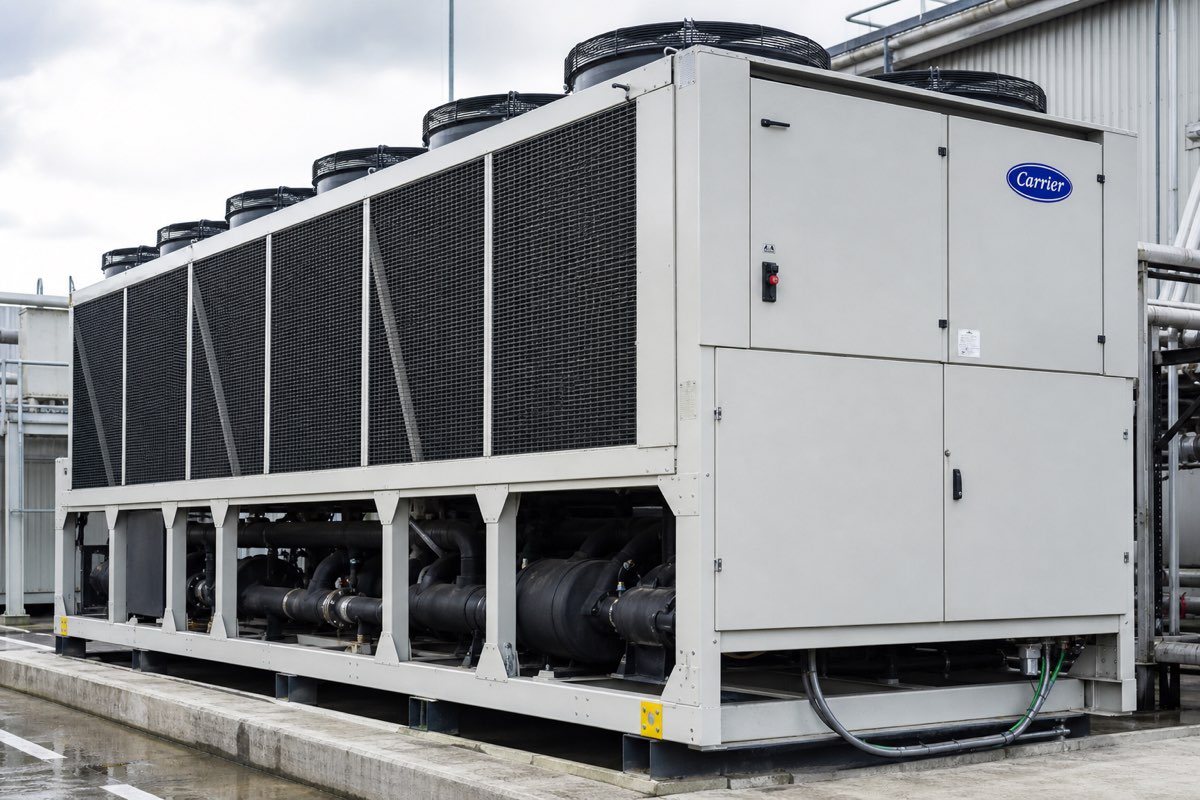
Portable chiller rental
When a single machine, a lab, or a process loop needs precise, dedicated cooling rather than a building-scale plant, a portable chiller is usually the right fit. We route portable chiller rental requests to vetted providers carrying compact spot and process units from roughly 1 to 50 tons, many of them glycol compatible and built for plug-and-play placement, so they can be rolled in close to the load and connected quickly.
By Industrial Rental Co Editorial Team Reviewed July 2026
- Compact spot and process units from roughly 1 to 50 tons
- Glycol compatible for low-temperature and freeze-protected loops
- Tight, stable process temperature control on a dedicated loop
- Sourced from insurance-verified third-party providers
Sizing a portable chiller to a single load
Portable chillers are matched to a specific process or piece of equipment rather than a whole building, so sizing starts with the load you actually need to hold and the temperature you need to hold it at. Capacity is quoted in tons, but at low process temperatures or with a glycol mixture the usable cooling drops, so the supply temperature is just as important as the headline tonnage. Sharing both keeps the match honest.
Most of these units are designed to move and connect quickly. They roll in on casters or a small frame, plug into available power, and tie into your loop with hose rather than hard pipe, which is what makes them practical for short jobs and tight spaces. Telling providers your load, target temperature, fluid, and available power up front is the fastest route to a unit that drops in and runs.
- Capacity quoted in tons at your specific process supply temperature
- Compact, mobile footprint for placement close to the load
- Hose-and-fitting connections instead of hard-piped tie-ins
- Power matched to standard or available site electrical service
Glycol, low temperatures, and tight control
Many portable applications run below the freezing point of plain water or demand a steady setpoint within a tight band, which is where glycol and precise control come in. A glycol and water mixture lowers the freezing point so the loop can run cold without ice forming and can protect the system against freezing during shutdowns. Specifying your fluid and the concentration you need lets providers match a unit rated for those conditions.
Stability is the other half of process cooling. Equipment like molding tools, lasers, and reactors often cares less about raw capacity and more about holding temperature within a narrow window, because drift shows up as defects or downtime. Portable process chillers are built around that kind of control, so describing how tight a band you need helps providers match the right unit rather than just the right tonnage.
- Glycol and water mixtures for sub-freezing loops and freeze protection
- Stable setpoint control for sensitive tools and instruments
- Reduced capacity at low temperatures planned into the sizing
- Fluid type and concentration confirmed before the match
Common applications for rental portable chillers
Process equipment cooling is the bread and butter, covering injection molding, lasers, welders, hydraulics, and other machinery that needs a dedicated chilled loop to run within spec. Labs and research settings are another fit, where instruments and reactors need stable, controlled temperatures independent of the building system. Breweries and food and beverage operations use them for fermentation and glycol-based process cooling where precise temperature matters to the product.
Temporary spot cooling rounds out the list, from holding a single room or enclosure to bridging a process loop while permanent equipment is serviced. Because these units are compact and quick to connect, they suit short and unplanned jobs well, though availability still varies by region. Requests route to multiple qualified providers, and response times vary by location and provider availability.
- Process equipment such as molding, lasers, welders, and hydraulics
- Labs and research where instruments need stable, dedicated cooling
- Breweries and food and beverage glycol process cooling
- Temporary spot cooling and process bridges during service
Common questions
What is a portable chiller rental used for?
Portable chillers provide dedicated cooling for a single machine, process loop, lab instrument, or small space rather than for a whole building. They are compact, mobile, and quick to connect, which makes them practical for short jobs, tight areas, and unplanned needs. Common uses include cooling molding and laser equipment, lab reactors, and brewery fermentation. They suit any load that needs its own controlled chilled water or glycol supply.
How big are rental portable chillers?
They typically range from around 1 ton up to roughly 50 tons, which covers most single-machine and small-process loads. Sizing depends on your actual heat load and the supply temperature you need to maintain, and low temperatures or glycol mixtures reduce usable capacity. Sharing your load, target temperature, and fluid lets providers match the right unit. For loads beyond this range, an air cooled or water cooled chiller is usually a better fit.
Can a portable chiller run glycol?
Yes, many portable process chillers are designed for glycol and water mixtures, which lower the loop's freezing point for low-temperature work and protect against freezing during shutdowns. The right concentration depends on how cold you need to run and your freeze-protection needs. Glycol also reduces the unit's effective cooling capacity, which a provider will account for when sizing. Specify your fluid and concentration in the request so the match is rated correctly.
How tightly can a portable process chiller hold temperature?
Portable process chillers are built to hold a stable setpoint, which matters for tools and instruments where temperature drift causes defects or downtime. The achievable control band depends on the specific unit, the load, and how it is connected. If your process needs a narrow tolerance, say so in the request so providers match a unit designed for that level of control rather than just the right capacity. Describing the application helps providers recommend the right fit.
What does a portable chiller need to operate?
Most need a level placement spot near the load, electrical power matched to the unit, and a hose connection into your process loop, plus the correct fluid such as water or a glycol mixture. Because they are designed to be plug-and-play, setup is usually quick compared with a building-scale system. Confirming available power and fluid in the request avoids a mismatch on arrival. Providers can advise on power and connection details when you share your site.
How fast can a portable chiller rental arrive?
Their compact, plug-and-play design generally makes portable chillers quicker to deploy than larger systems, but timing still depends on freight distance, unit availability, and the provider. There is no fixed or guaranteed window. Requests route to multiple qualified providers, and response times vary by location and provider availability. Sharing your load and site details up front speeds the match and helps confirm the unit will connect cleanly when it arrives.
Get matched with portable chiller providers
Your specs go on file with us, and we run the search for you, free of charge. Because we don't own the equipment, the match is about your needs, not our inventory. Response times vary by location and provider availability.