
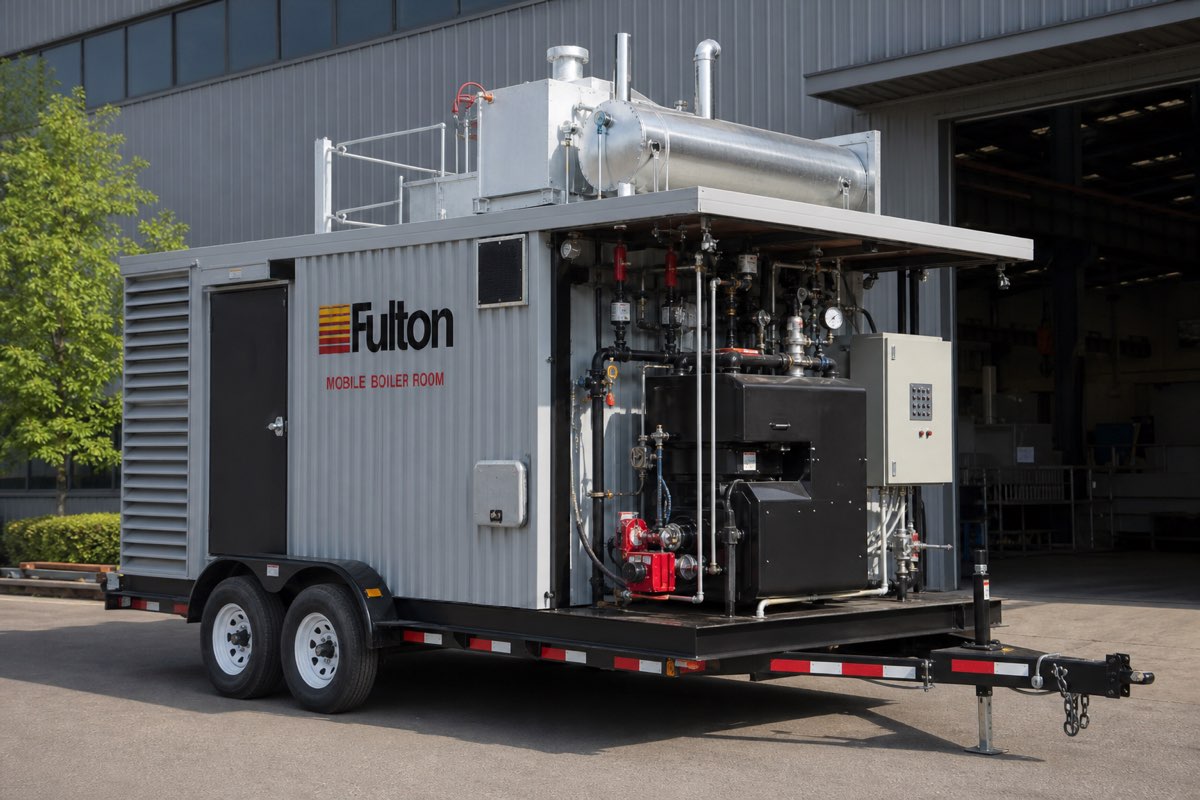
Industrial steam boiler rental
When a steam plant goes down or a planned outage pulls a boiler offline, process steam still has to flow. We route steam boiler rental requests to vetted providers carrying trailer- and skid-mounted units from roughly 100 to 100,000+ pounds of steam per hour, in low- and high-pressure configurations, for hospitals, refineries, food processing, and manufacturing.
By Industrial Rental Co Editorial Team Reviewed July 2026
- Firetube and watertube units, low- and high-pressure steam
- Natural gas, propane, diesel, and dual-fuel firing
- Trailer- and skid-mounted, with feedwater and deaerator support
- ASME-coded equipment from insurance-verified providers
Sizing a rental steam boiler to your load
Steam rental requests are sized by output, not nameplate horsepower alone. Providers quote against pounds of steam per hour at your operating pressure, because a boiler rated for 15 PSIG low-pressure heating behaves very differently from one delivering 150 PSIG to a process header. Telling providers your required flow, pressure, and fuel up front is the single biggest driver of an accurate quote.
Most temporary installations fall into one of three buckets: a small firetube trailer covering building heat or humidification, a mid-size unit backstopping a process line during a retube or inspection, or a large watertube package carrying a refinery or central plant header. The wider your tolerance on configuration, the faster a provider can mobilize from existing stock.
- Low-pressure steam under 15 PSIG for heating and humidification
- High-pressure steam over 15 PSIG for process and sterilization
- Feedwater treatment, softeners, and deaerators as part of the package
- Operator and water-chemistry support where licensing requires it
Common reasons a steam boiler comes in on a trailer
Planned outages are the cleanest case: a scheduled retube, a National Board inspection, or a burner rebuild takes a permanent boiler down for days or weeks, and a rental holds the load so production never stops. Booking that capacity weeks ahead almost always gets better selection and pricing than a same-week scramble.
Unplanned failures are the other half. A cracked tube sheet, a failed controls upgrade, or a flooded boiler room turns into lost production by the hour, and a rental is the bridge until the permanent unit is back. Because availability and freight vary by region, requests route to multiple qualified providers rather than a single yard.
What a rental steam install actually needs
A rental boiler is rarely a standalone drop. Most installs need a feedwater source and treatment, a fuel connection sized to the firing rate, a stack or exhaust path, electrical power for controls and pumps, and a path for blowdown and condensate. High-pressure steam often triggers state operating-engineer licensing, which experienced providers plan for as part of the scope.
Sharing your utility constraints early matters. A unit that fires at full rate on paper still needs gas pressure and electrical capacity at the curb to deliver it. Providers who work your region regularly handle permits, rigging, and tie-ins as part of the install rather than as surprises after the trailer arrives.
Common questions
How is a rental steam boiler sized?
By steam output at your operating pressure, expressed in pounds of steam per hour, plus the fuel available on site. Boiler horsepower is a useful shorthand (one BHP is roughly 34.5 pounds of steam per hour), but providers quote against the actual flow and pressure your process header needs. Sharing required flow, pressure, and fuel up front gets the most accurate match.
What is the difference between low-pressure and high-pressure rental steam?
Low-pressure steam runs under 15 PSIG and typically serves building heat, humidification, and some light process work. High-pressure steam runs above 15 PSIG for process, sterilization, and central plant loads. High-pressure operation usually carries additional code and operator-licensing requirements, which vary by state and which experienced providers plan around.
How fast can a rental steam boiler be on site?
It depends on unit size, fuel, freight distance, and provider availability. Small trailer-mounted firetube units near a stocked yard mobilize quickly, while large watertube packages, rigging, and permits take longer. Because timing varies, requests are routed to multiple qualified providers rather than promised against a fixed window.
Do rental steam boilers come with feedwater treatment?
Usually yes, as part of the package. Most temporary steam installs include water softening or treatment, and many include a deaerator, because feedwater chemistry protects both the rental unit and your system. Specify your water source and quality in the request so providers can scope treatment correctly.
What fuels are available for rental steam boilers?
Natural gas, propane, diesel or number 2 oil, and dual-fuel units are all common. The right choice depends on what is available and permitted at your site and how fast you need to fire. Note any fuel or emissions constraints in the request so providers quote a unit you can actually run.
Is a licensed operator required for a rental steam boiler?
Often for high-pressure steam, depending on state and local rules. Some jurisdictions require a licensed operating engineer on site for boilers above a certain pressure or size. Providers who work your area regularly know the local requirements and can include operator or rounds support in the scope when needed.
Get matched with steam boiler providers
Your specs go on file with us, and we run the search for you, free of charge. Because we don't own the equipment, the match is about your needs, not our inventory. Response times vary by location and provider availability.