
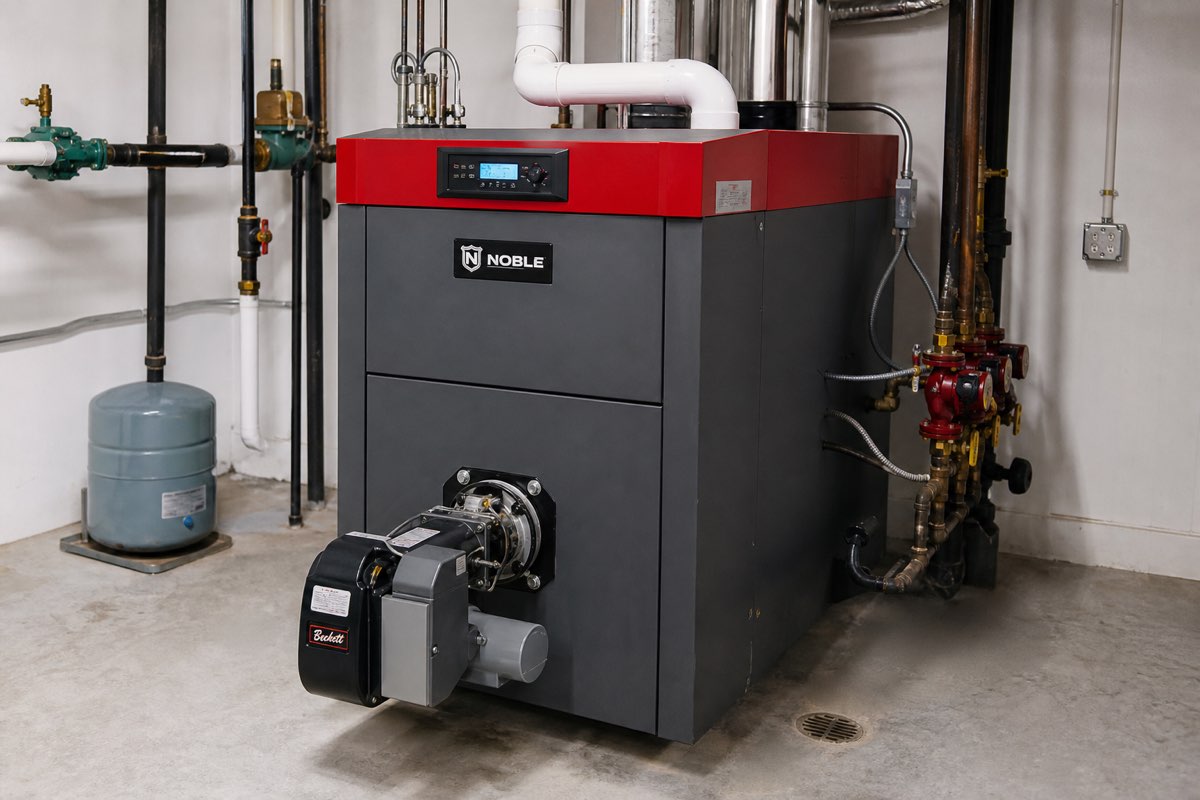
Hot water boiler rental
Hydronic heating and commercial hot water loads do not stop because a boiler is down for repair, replacement, or a winter peak. We route hot water boiler rental requests to vetted providers carrying temporary units sized for heating loops and process hot water, from modest building loads to central plant and campus distribution. Requests route to several qualified providers at once, and response times vary by location and provider availability.
By Industrial Rental Co Editorial Team Reviewed July 2026
- Hydronic heating loops and commercial domestic hot water
- Sized by BTU per hour output, GPM flow, and supply and return temperatures
- Condensing and non-condensing units for different return temperatures
- Trailer- and skid-mounted packages from insurance-verified providers
BTU per hour, GPM flow, and delta-T together
A hot water boiler is sized by heat output and flow, not by a single number. Providers quote against BTU per hour of output, the gallons per minute (GPM) the loop circulates, and the supply and return temperatures the system runs. The difference between supply and return, the delta-T, ties those together: a loop running a 20 degree delta-T moves heat differently than one running 40 degrees, and the GPM follows from the heat load and that delta-T.
Telling providers your design supply temperature, your return temperature, and either your GPM or your required BTU per hour up front is the single biggest driver of an accurate quote. If you only know one or two of those, share what you have along with the building or process the loop serves, and a provider can work back to a starting unit. The clearer the flow and temperature picture, the better the match.
- BTU per hour output for the heating or process load
- GPM flow the loop circulates at design conditions
- Supply and return temperatures, which set the delta-T
- Whether the load is space heating, process hot water, or both
Return temperature drives the right unit
The choice between condensing and non-condensing comes down mostly to return water temperature. Condensing boilers recover extra heat from flue gases and run most efficiently when return water is low enough for that flue gas to condense, commonly around 130 degrees Fahrenheit or below, which suits modern low-temperature hydronic systems. Non-condensing units are a common fit for higher-temperature loops and older systems that return hotter water.
Because a temporary unit ties into your existing loop, the return temperature your system actually delivers matters more than the boiler nameplate. A condensing unit fed consistently hot return water will not realize its efficiency, while a non-condensing unit handles high return temperatures without issue. Sharing your real operating temperatures, not just the design intent, helps a provider match a unit that performs the way you expect.
- Condensing units favor low return temperatures, commonly near or below 130 degrees Fahrenheit
- Non-condensing units suit higher-temperature and older loops
- Return water temperature matters more than nameplate efficiency
- Share real operating temperatures, not only design values
Hospital and campus loops, housing, and process loads
Hospital and campus heating loops are a frequent case. A central hot water plant feeds many buildings, so taking one boiler down for a retube or replacement still leaves the loop to carry, and a temporary unit holds distribution while the permanent plant is serviced. Multifamily housing is similar at smaller scale: a central hot water boiler covers tenant heat and domestic hot water, and a rental keeps the building habitable during a repair.
Process hot water is the third common load. Many facilities use hot water rather than steam for washdown, jacketed heating, and temperature-controlled processes, and these loads can be as time-sensitive as any heating loop. For all of these, a temporary hot water boiler ties into the existing piping and pumps, so sharing your loop layout, flow, and temperatures helps providers scope a unit and the pumps and controls that go with it.
- Hospital and campus central heating loops during plant service
- Multifamily housing: tenant heat and domestic hot water
- Process hot water for washdown and jacketed or temperature-controlled work
- Tie-ins to existing piping, pumps, and controls
Common questions
How is a rental hot water boiler sized?
By heat output and flow together, not a single figure. Providers quote against BTU per hour of output, the GPM the loop circulates, and the supply and return temperatures the system runs, since those define the delta-T. If you know your required BTU per hour or your GPM plus your supply and return temperatures, a provider can match a unit accurately. Sharing the building or process the loop serves helps when some numbers are missing.
What is delta-T and why does it matter for sizing?
Delta-T is the difference between the supply and return water temperatures in a hydronic loop. It ties heat output to flow: for a given BTU per hour load, a larger delta-T means less GPM is needed, and a smaller delta-T means more. Providers use your delta-T to confirm the boiler and pumps match your loop. Reporting your real supply and return temperatures, not just the design values, leads to a better match.
What is the difference between condensing and non-condensing rental boilers?
It comes down mostly to return water temperature. Condensing boilers recover extra heat from flue gases and are most efficient when return water is low enough to condense that flue gas, commonly around 130 degrees Fahrenheit or below. Non-condensing units are a common fit for higher-temperature and older loops that return hotter water. The return temperature your loop actually delivers matters more than the nameplate, so share your real operating temperatures.
Can a hot water rental tie into my existing loop?
Yes, that is the normal arrangement. A temporary hot water boiler connects to your existing piping, pumps, and controls so it can carry the loop while the permanent unit is serviced. Sharing your loop layout, design flow, and supply and return temperatures helps providers scope the unit plus any pumps and controls it needs. Noting your tie-in points and available utilities early avoids surprises during the install.
What applications use rental hot water boilers?
Common applications include hospital and campus heating loops, multifamily housing heat and domestic hot water, and process hot water for washdown or jacketed heating. Any of these can need a temporary boiler during a repair, a replacement, or a winter peak. Because hot water and steam are sized and connected differently, tell providers you need hot water and at what output, flow, and temperatures. That distinction up front avoids a mismatch.
Do you own the hot water boilers, or are they from third parties?
We do not own equipment. We are a matching service that routes hot water boiler rental requests to vetted third-party providers who carry temporary units, and those providers quote, deliver, and install. Routing one request to several qualified providers gives you broader reach than calling yards individually. Response times depend on each provider's stock, distance, and availability, so they vary by location.
Get matched with hot water boiler providers
Your specs go on file with us, and we run the search for you, free of charge. Because we don't own the equipment, the match is about your needs, not our inventory. Response times vary by location and provider availability.