
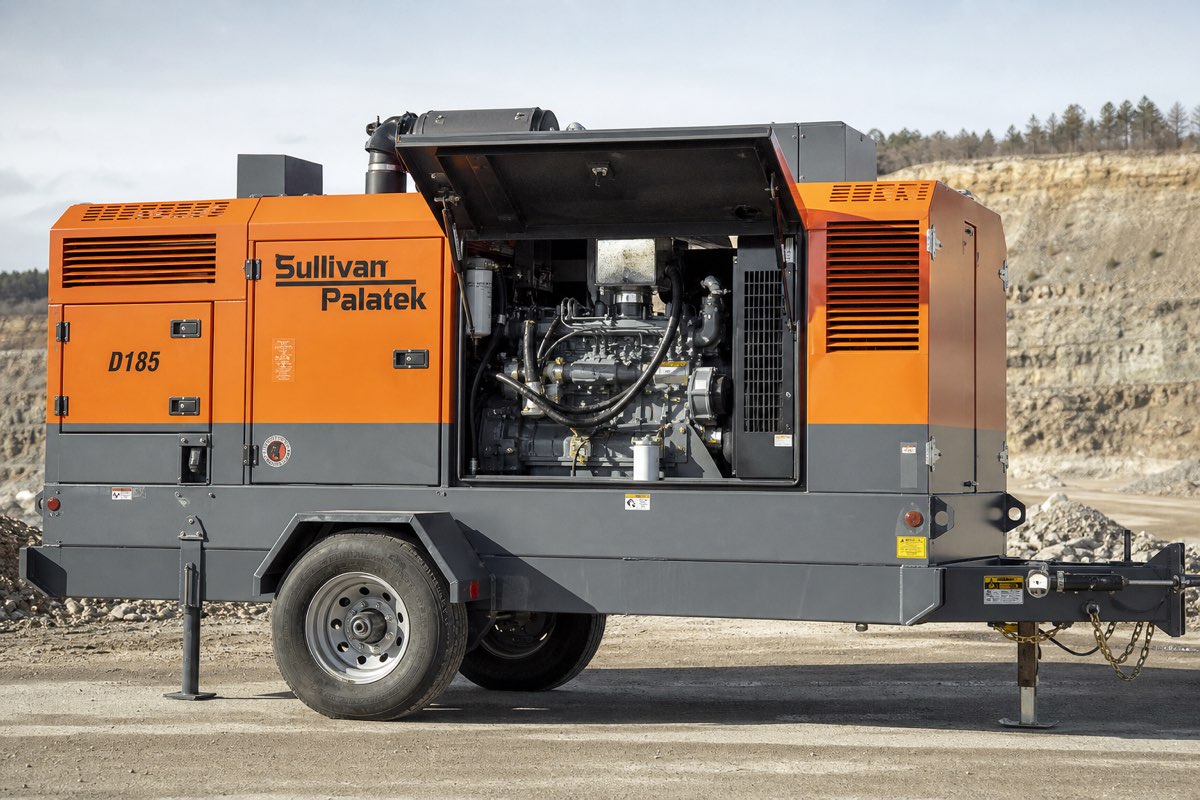
Oil-free air compressor rental
When a process cannot tolerate any oil carryover in its compressed air, an oil-free machine is not a preference, it is a requirement. We route oil-free air compressor rental requests to vetted providers carrying Class 0 oil-free units, sized by CFM and PSI and matched to the ISO 8573-1 air quality your process needs, for pharmaceutical, food and beverage, and electronics applications.
By Industrial Rental Co Editorial Team Reviewed July 2026
- Class 0 oil-free air for contamination-sensitive processes
- Sized by CFM at your required PSI, with headroom for peaks
- Matched to ISO 8573-1 air quality classes for oil, water, and particles
- From insurance-verified providers across multiple regions
When oil carryover is not an option
Standard lubricated compressors are excellent machines, but a small amount of oil aerosol carries downstream with the air, and filtration reduces it rather than eliminating it. For many processes that is fine. For others it is a defect waiting to happen. In pharmaceutical manufacturing, food and beverage contact, and electronics assembly, oil carryover can contaminate product, foul a coating, or fail an audit, which is why these processes specify oil-free air at the source rather than relying on filters alone.
Oil-free compressors achieve compression without lubricant in the air-end, so the delivered air has no compressor oil to remove. That matters most where air touches product directly, where a process is sensitive to hydrocarbons, or where a quality system requires documented air purity. Telling providers what the air actually touches, and which standard you have to meet, lets them match a unit and treatment train that satisfies the spec rather than guessing at it.
- Direct-contact air in food, beverage, and pharmaceutical production
- Coating, plating, and electronics assembly sensitive to hydrocarbons
- Instrument and control air where reliability and purity matter
- Any process under a quality system that documents air purity
CFM, PSI, and sizing oil-free air correctly
Compressed air is matched on two numbers first: the volume of air your process consumes, measured in cubic feet per minute, and the pressure it needs, measured in pounds per square inch. Size the CFM to your peak demand plus realistic headroom, because a compressor that is constantly maxed out runs hot and cannot absorb swings. Pressure matters too, since pushing a machine above its rated PSI wastes energy and pulling too little starves your equipment. Listing your tools or process points and their air demand helps providers add up the true load.
Air quality is the third dimension and it is where oil-free requests differ from general-purpose ones. Beyond the compressor itself, the package usually includes dryers and filters sized to hit a target dew point and particle level. A pharmaceutical filling line and a general blow-off both use compressed air, but they sit at very different points on the purity scale. Sharing your required dew point and any cleanliness standard lets providers scope the dryer and filtration alongside the compressor as one matched system.
Reading ISO 8573-1 air quality classes
ISO 8573-1 is the international standard that defines compressed air purity. It splits air quality into three contaminant categories, solid particles, water, and total oil, and assigns each a numbered class, with lower numbers meaning cleaner air. A spec written as a set of three class numbers tells a provider exactly how clean the particles, moisture, and oil content have to be. This is the common language that lets a rental be matched to a process requirement instead of a vague request for clean air.
Class 0 is the strictest oil designation in the standard. It indicates the lowest oil content tier, used where even trace oil is unacceptable, and it is the reason oil-free machines exist as a category. Pairing a Class 0 oil-free compressor with the right dryer and filtration is how a rental package meets a demanding combined spec. If you know the ISO 8573-1 classes your process requires, include them, and if you do not, describe what the air touches so providers can recommend a class and treatment train.
- Three categories: solid particles, water content, and total oil
- Lower class numbers mean cleaner air in each category
- Class 0 is the strictest oil tier, the basis for oil-free duty
- Dryers and filtration sized to hit the full class spec
Common questions
Why rent an oil-free compressor instead of filtering a standard one?
Filtration reduces oil carryover from a lubricated compressor but does not fully eliminate it, and filters can fail or be bypassed. For processes where any oil is a defect, such as direct food and beverage contact, pharmaceutical production, or electronics assembly, an oil-free machine removes the oil at the source rather than relying on downstream filters. That is why these applications specify oil-free air rather than treating filtered lubricated air as equivalent.
What does Class 0 oil-free mean?
Class 0 is the strictest oil-content designation in the ISO 8573-1 air quality standard, used where even trace oil is unacceptable. It represents the lowest oil tier the standard defines and is the benchmark associated with true oil-free duty. A Class 0 oil-free compressor delivers air with no compressor oil to remove, which is why it is specified for the most contamination-sensitive processes. Pairing it with the right dryer and filtration meets the full air-quality spec.
How do I size an oil-free air compressor rental?
Start with CFM, the air volume your process consumes, and PSI, the pressure it needs. Add up the demand of your tools or process points, then add realistic headroom so the unit is not running maxed out. Then define air quality, since oil-free requests also specify dew point and ISO 8573-1 classes. Sharing CFM, PSI, and your purity requirements lets providers match the compressor, dryer, and filtration as one package.
What is ISO 8573-1?
ISO 8573-1 is the international standard for compressed air purity. It classifies air by three contaminants, solid particles, water, and total oil, and assigns each a numbered class, where lower numbers mean cleaner air. A complete spec is usually written as three class numbers, one per category. It gives buyers and providers a shared language so a rental can be matched precisely to a process requirement rather than a vague clean-air request.
Do oil-free rentals include air dryers and filtration?
Usually yes, because hitting an air-quality spec takes more than the compressor alone. The package is typically scoped with dryers to control dew point and filters to control particles, sized to the ISO 8573-1 classes your process needs. Oil-free handles the oil category at the source, while the dryer and filters address moisture and particles. Sharing your required dew point and classes lets providers scope the full treatment train.
How fast can an oil-free compressor be on site?
It depends on size, the air-quality package, freight distance, and provider availability. A common-size oil-free unit near a stocked yard mobilizes faster than a large machine with a custom dryer and filtration train. Because oil-free rentals often carry specific treatment requirements, scoping the full spec up front speeds the match. Response times vary by location and provider availability, so requests route to multiple qualified providers rather than a fixed window.
Air compressor rentals
Where we route air compressor rentals
Get matched with oil-free compressor providers
Your specs go on file with us, and we run the search for you, free of charge. Because we don't own the equipment, the match is about your needs, not our inventory. Response times vary by location and provider availability.