
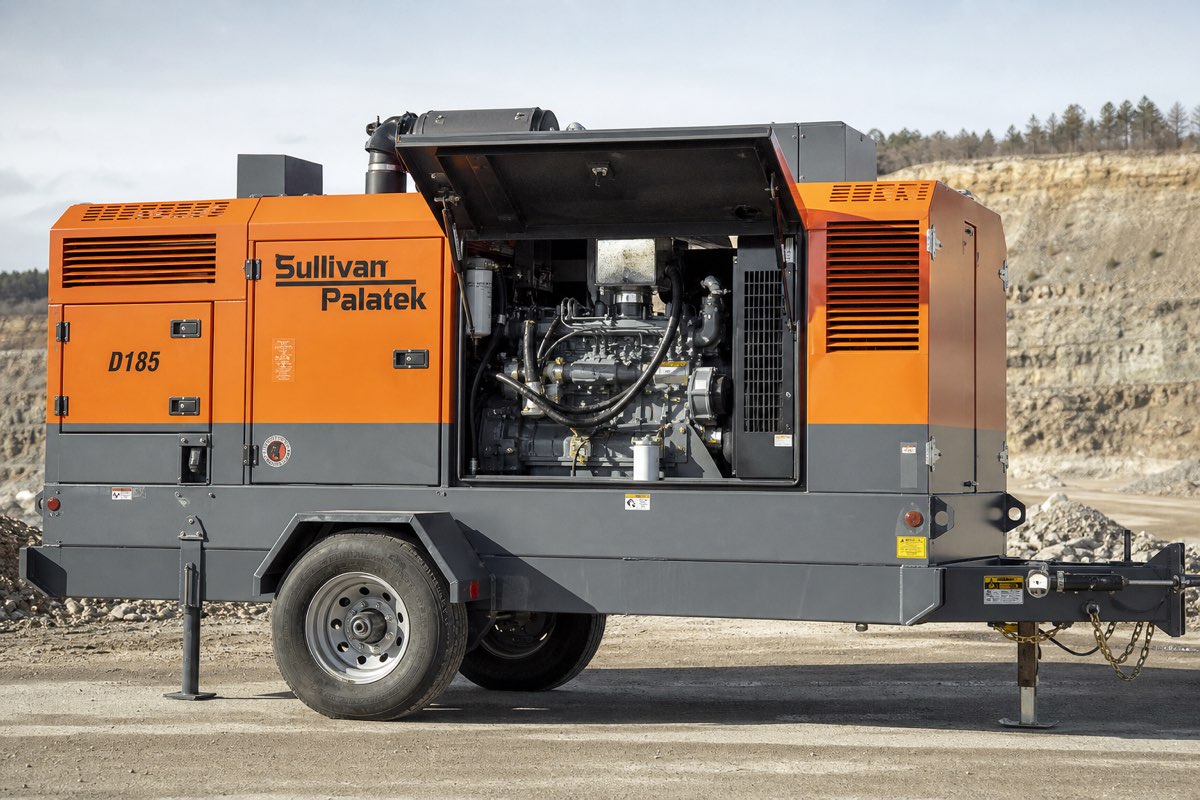
Diesel air compressor rental
When a job sits beyond the reach of adequate grid power, the compressor has to bring its own engine. We route diesel air compressor rental requests to vetted providers carrying towable and skid-mounted units from roughly 185 to 1600 and more CFM, for pipeline work, sandblasting, remote construction, and plant turnarounds where running an electric machine is not practical.
By Industrial Rental Co Editorial Team Reviewed July 2026
- Towable and skid-mounted diesel units, no grid power required
- CFM ranges from roughly 185 to 1600 and beyond
- Built for pipeline, blasting, remote sites, and turnarounds
- From insurance-verified providers across multiple regions
Compressed air where the grid cannot reach
Electric compressors are efficient and quiet, but they assume a power source that can carry them. On a pipeline right-of-way, a remote construction pad, or a site where the available service cannot start a large motor, that assumption breaks down. A diesel compressor carries its own engine and fuel, so it makes air anywhere a truck or skid can be placed. That independence from grid power is the whole reason the category exists and the main thing that decides between diesel and electric on a given job.
The tradeoff is fuel and logistics. A diesel unit needs refueling, exhaust clearance, and routine engine service, and it brings engine noise and emissions that an electric machine does not. For temporary work in places without adequate power, that tradeoff is usually worth it, because the alternative is trenching in temporary power or running a generator just to feed an electric compressor. Telling providers about site access, fuel logistics, and any emissions or noise constraints helps them match a unit you can actually run where it has to sit.
- No utility tie-in or temporary power required to operate
- Towable units move with a standard truck and hitch
- Skid-mounted options for crane or forklift placement
- Self-contained fuel, ready for remote and off-grid sites
Matching diesel CFM to the job
Diesel compressors are matched first on CFM, the volume of air the work consumes, and the pressure it needs. The 185 CFM class is the workhorse for one or two pneumatic tools and light utility air. Mid-range units in the several-hundred CFM band feed multiple tools, blasting pots, or a small crew. Large machines from roughly 750 up past 1600 CFM drive pipeline work, big blast operations, and high-volume air demands. Adding up the air your tools and processes pull, then leaving headroom, is what gets the size right.
Pressure matters alongside volume, since some applications need only standard tool pressure while others, like certain blasting and pipeline tasks, call for higher PSI. Air quality is usually less strict than on a pharmaceutical or electronics job, but moisture control still matters for blasting and pneumatic tools, so aftercoolers and filtration may be part of the scope. Sharing your tools, target pressure, and duty cycle lets providers match a unit that holds up under continuous demand rather than one that is constantly maxed out.
Applications for diesel air on site
Pipeline and remote construction are the classic cases. Right-of-way work, tie-ins, and pad construction often happen miles from usable power, and a towable diesel compressor follows the crew down the line. Sandblasting and surface preparation are another mainstay, where high-volume air drives the blast pots that strip and prep steel, tanks, and structures. In both cases the compressor is doing continuous, demanding duty, so sizing for the real load with headroom is what keeps the job moving.
Plant turnarounds round out the picture. During a major outage, temporary air for tools, purging, and pneumatic equipment can outrun what house air can supply, and a diesel unit parked outside fills the gap without tapping plant utilities. Because availability, freight, and fuel logistics vary by region, requests route to multiple qualified providers rather than a single yard, and response times vary by location and provider availability.
- Pipeline construction, tie-ins, and right-of-way work
- Sandblasting and surface preparation at high air volume
- Remote construction sites without usable grid power
- Plant turnarounds and outages needing temporary air
Common questions
When does a diesel compressor make more sense than electric?
When the site lacks adequate grid power to run an electric machine, diesel is usually the practical choice. Pipeline rights-of-way, remote construction pads, and sites where the available service cannot start a large motor all fit this case. A diesel unit carries its own engine and fuel, so it makes air anywhere a truck or skid can reach. Where good power is available and noise or emissions are a concern, electric is often preferred instead.
What CFM range do towable diesel compressors cover?
Towable and skid diesel units commonly run from about 185 CFM up past 1600 CFM. The 185 class suits one or two tools and light utility air, mid-range units in the several-hundred CFM band feed multiple tools or a blast pot, and large machines from roughly 750 CFM and up drive pipeline and high-volume blasting work. Sizing comes down to adding up the air your tools consume and leaving headroom so the unit is not constantly maxed out.
How do I size a diesel air compressor for blasting?
Blasting is air-hungry, so start by adding up the CFM each blast pot and nozzle requires at the pressure you intend to run. Bigger nozzles and higher pressure consume far more air, so undersizing slows the work and wastes abrasive. Most blasting jobs land in the mid-to-large CFM classes, and moisture control matters, so aftercoolers and filtration are often part of the scope. Share your nozzle sizes, pressure, and duty cycle so providers can match a unit that holds up.
Do diesel compressors need refueling and service on site?
Yes. A diesel compressor carries its own engine, so it needs fuel, exhaust clearance, and routine engine service to keep running through a job. That is the tradeoff for grid independence, along with engine noise and emissions that an electric unit does not produce. Planning fuel delivery and access for service keeps a diesel unit working on remote sites. Note your fuel logistics and any emissions or noise limits so providers scope the right unit.
Can a diesel compressor run continuously?
Many are built for continuous, demanding duty, which is exactly why they suit pipeline and blasting work. The key is sizing for the real load with headroom rather than running a unit at its limit around the clock, which runs it hot and shortens service intervals. Sharing your duty cycle and the air your tools actually pull lets providers match a machine rated for sustained operation rather than short bursts.
How fast can a diesel compressor be on site?
It depends on unit size, freight distance, fuel logistics, and provider availability. A common 185 or mid-range towable near a stocked yard mobilizes faster than a large skid unit headed to a remote pad. Because diesel work often involves access and fuel planning, describing your site up front speeds the match. Response times vary by location and provider availability, so requests route to multiple qualified providers rather than a fixed window.
Air compressor rentals
Where we route air compressor rentals
Get matched with diesel compressor providers
Your specs go on file with us, and we run the search for you, free of charge. Because we don't own the equipment, the match is about your needs, not our inventory. Response times vary by location and provider availability.