
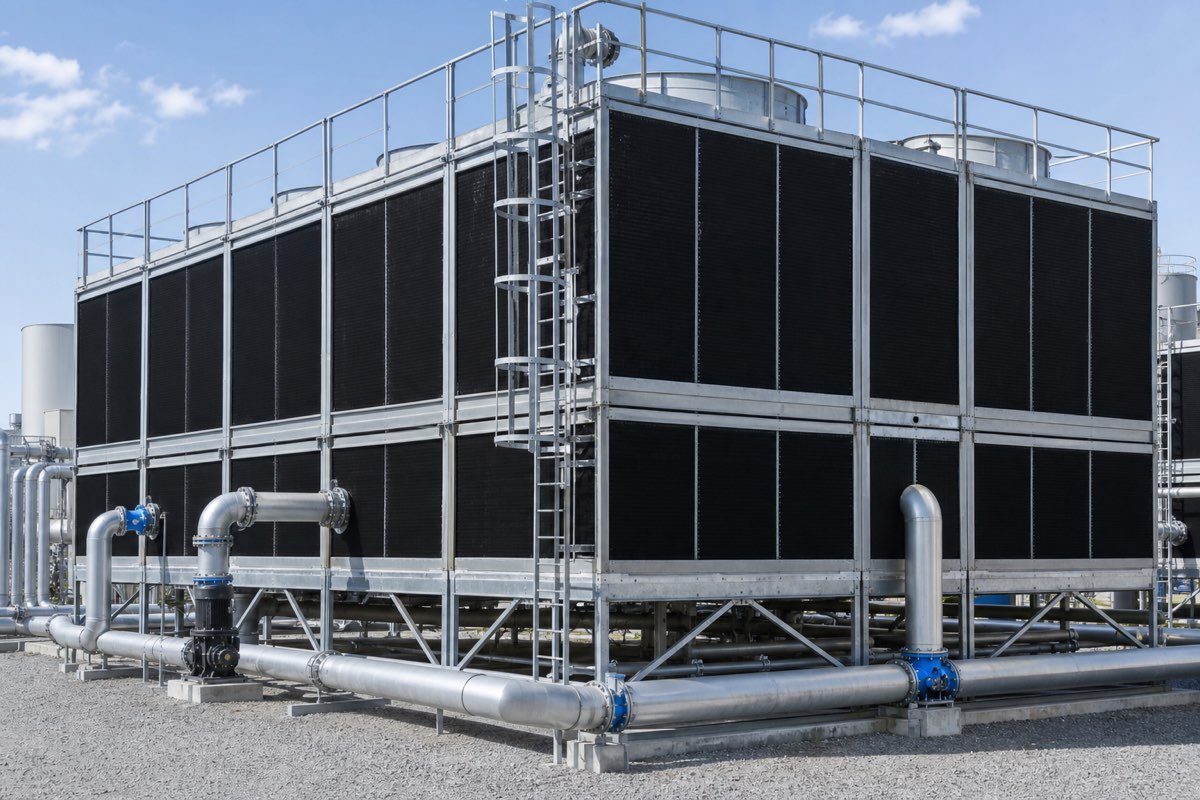
Temporary cooling tower rental
When a permanent cooling tower comes offline or a process load outruns installed heat-rejection capacity, condenser water still has to be cooled. We route temporary cooling tower rental requests to vetted providers carrying modular and trailer-mounted towers, sized by tonnage, approach, and range, for central plants, process heat rejection, and planned turnarounds.
By Industrial Rental Co Editorial Team Reviewed July 2026
- Modular and trailer-mounted towers for condenser-water loops
- Sized by tonnage, approach to wet bulb, and range across the tower
- Pairs with water-cooled chillers and process heat exchangers
- From insurance-verified providers across multiple regions
Sizing a temporary cooling tower to your load
Cooling towers are sized by the heat they reject, not by footprint alone. Providers quote against tonnage or BTU per hour, the design wet-bulb temperature at your site, and the approach and range your loop needs. Approach is how close the leaving water gets to the ambient wet bulb, and range is the temperature drop the tower delivers across the supply and return. A tight approach in a humid region takes a larger tower than the same tonnage in a dry climate, so sharing your wet bulb and target temperatures up front is the single biggest driver of an accurate quote.
Most temporary installations fall into a few patterns. A modular open-circuit tower backstops a chiller plant during a basin cleaning or fill replacement, a trailer-mounted unit covers a process loop during a heat exchanger swap, or a bank of towers carries a central plant through a summer turnaround. The wider your tolerance on configuration and footprint, the faster a provider can mobilize from existing stock.
- Design wet-bulb temperature and target leaving-water temperature
- Required flow in gallons per minute and condenser-water delta T
- Open-circuit versus closed-circuit, where water quality matters
- Water treatment, filtration, and basin chemistry as part of the package
Cooling towers and water-cooled chillers as a system
A temporary cooling tower rarely stands alone. It usually pairs with a water-cooled chiller, a process heat exchanger, or a condenser loop that needs heat rejected before the water returns. Matching the tower to the chiller matters: a water-cooled chiller depends on a steady supply of cool condenser water, and an undersized or poorly matched tower drags down chiller capacity and efficiency. When the request covers both pieces, providers can scope a tower and chiller that are sized to work together rather than fighting each other.
Loop hydraulics are the other half of the match. Pump head, pipe runs, and the condenser-water delta T all shape what tower and pump package fits. Sharing your flow in gallons per minute and the temperature drop your equipment expects helps providers quote the right tower, pumps, and any filtration or side-stream treatment in one scope rather than as surprises after delivery.
Applications for temporary heat rejection
Central plants are the cleanest case. A scheduled basin cleaning, a fill media replacement, or a National Board style inspection on associated equipment takes a permanent tower down for days or weeks, and a rental holds the heat-rejection load so the chiller plant keeps running. Booking that capacity ahead of a summer turnaround almost always gets better selection and pricing than a same-week scramble into peak season.
Process heat rejection and turnarounds make up the rest. A new line, a temporary process, or a hot summer that pushes installed capacity past its limit can all call for supplemental cooling. Because availability, freight, and seasonal demand vary by region, requests route to multiple qualified providers rather than a single yard, and response times vary by location and provider availability.
- Central plant support during basin cleaning or fill replacement
- Supplemental heat rejection for process loops and new lines
- Summer peak shaving when installed capacity runs short
- Planned plant turnarounds and outages
Common questions
How is a temporary cooling tower sized?
By the heat it has to reject, expressed in tonnage or BTU per hour, plus the design wet-bulb temperature at your site and the approach and range your loop needs. Approach is how close the leaving water gets to the ambient wet bulb, and range is the temperature drop across the tower. A tight approach in a humid climate takes a larger tower than the same tonnage in dry air, so sharing your wet bulb, flow, and target temperatures gets the most accurate match.
What is the difference between approach and range?
Range is the temperature difference between the water entering and leaving the tower, which reflects how much heat your process puts into the loop. Approach is the difference between the leaving water temperature and the ambient wet-bulb temperature, which reflects how hard the tower has to work. A smaller approach is harder to achieve and generally needs a larger tower. Providers use both numbers, plus flow, to size the unit correctly.
Can a rental cooling tower pair with a water-cooled chiller?
Yes, and that is one of the most common configurations. A water-cooled chiller needs a steady supply of cool condenser water, and the tower rejects that heat before the water returns. When your request covers both the tower and the chiller, providers can scope them to work together so neither piece limits the other. Sharing your condenser-water flow and delta T helps them match the pumps and treatment as well.
Open-circuit or closed-circuit cooling tower, which is matched?
It depends on your water quality and how clean the loop must stay. Open-circuit towers expose the process water to air and are common for general condenser-water duty. Closed-circuit towers keep the process fluid isolated and are chosen when contamination, fouling, or freeze protection is a concern. Note your water source and any cleanliness or glycol requirements in the request so providers quote the right type.
How fast can a temporary cooling tower be on site?
It depends on tower size, freight distance, seasonal demand, and provider availability. Smaller modular towers near a stocked yard mobilize faster, while large banks of towers, rigging, and pump packages take longer, and summer peak season tightens availability everywhere. Because timing varies, requests route to multiple qualified providers rather than being promised against a fixed window, and response times vary by location and provider availability.
Does a rental cooling tower include water treatment?
Usually treatment and filtration are part of the package, because basin chemistry protects both the rental unit and your loop. Open-circuit towers in particular need biological and scale control to run cleanly, and many installs include side-stream filtration. Specify your water source, makeup quality, and any discharge constraints in the request so providers can scope treatment and basin management correctly.
Cooling tower rentals
Where we route cooling tower rentals
Get matched with cooling tower providers
Your specs go on file with us, and we run the search for you, free of charge. Because we don't own the equipment, the match is about your needs, not our inventory. Response times vary by location and provider availability.