
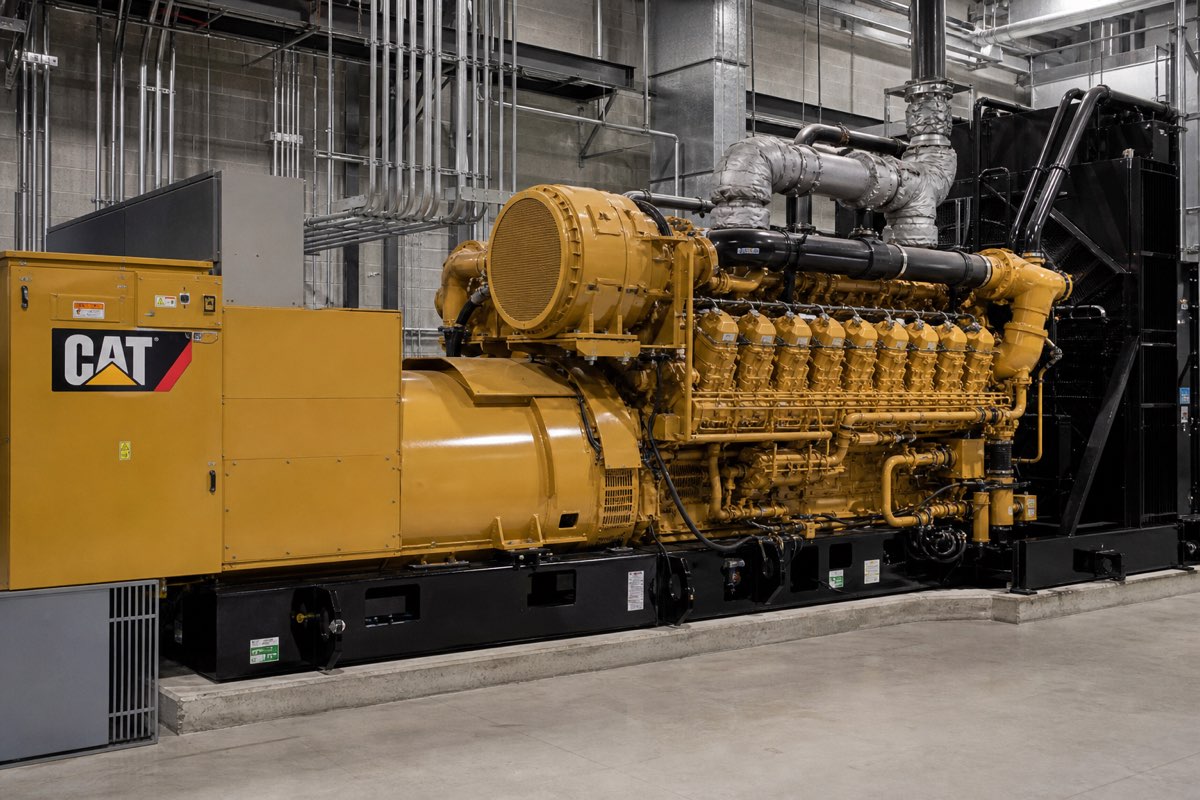
Data center generator rental
Data centers run on uptime, and when permanent power is offline for a fault, a planned tie-in, or a capacity expansion, the critical load cannot wait. We route data center generator rental requests to vetted providers carrying units that parallel into redundant configurations, commission against load banks, and tie in to existing switchgear, so SLA-sensitive facilities keep the floor energized while the permanent system is restored or expanded.
By Industrial Rental Co Editorial Team Reviewed July 2026
- Backup and bridge power for uptime-critical, SLA-sensitive facilities
- Paralleling switchgear and N+1 redundancy for the critical load
- Load-bank commissioning before the set carries live load
- Tie-in coordination with existing switchgear and transfer schemes
Backup and bridge power for the critical load
Data center rental requests are sized around the critical load and its redundancy target, not just a single nameplate number. Providers quote against the kilowatts and kilovolt-amperes the floor actually draws, the voltage and tie-in scheme, and how much spare capacity the design calls for, because a facility carrying live racks has no tolerance for an undersized or single-string source. Telling providers your critical load, voltage, redundancy target, and tie-in point up front is the single biggest driver of an accurate quote.
Most data center rentals fall into two roles. Backup power stands in for a failed or offline permanent generator or utility feed, holding the load until the permanent system is back. Bridge power covers a planned gap, such as a switchgear replacement, an electrical tie-in, or a capacity expansion where the facility has outgrown its installed power. In both roles, paralleling lets providers build the capacity and redundancy the critical load requires from multiple sets.
- Critical load in kW and kVA at the facility voltage
- Redundancy target such as N+1 expressed in spare units
- Tie-in point at existing switchgear or a transfer scheme
- Paralleling switchgear to combine and synchronize sets
N+1 redundancy, paralleling, and commissioning
Uptime-critical sites are usually specified with redundancy built in. An N+1 design carries the full critical load on N units and adds one spare, so a single set can fail or be serviced without dropping the floor. Providers reach those configurations with paralleling switchgear, which synchronizes multiple generators into one coordinated source and manages how they share and shed load. The redundancy target you specify drives how many sets and how much switchgear the package needs.
Commissioning matters as much as capacity in these environments. Load banks let providers prove the paralleled system under controlled load before it ever carries live racks, verifying capacity, synchronization, and load sharing without risking the critical floor. Because these facilities are SLA-sensitive, the testing and tie-in sequence is planned in advance, and response times vary by location and provider availability rather than against any fixed window we promise.
- N+1 and higher redundancy targets for the critical load
- Paralleling switchgear for synchronization and load sharing
- Load-bank commissioning before live load is applied
- Planned, sequenced tie-in to avoid unintended interruptions
Fuel logistics, tie-in, and pairing with cooling
A data center rental is rarely a single drop. Most deployments need a rated placement area, a fuel plan with tanks sized to the runtime and a refueling schedule for extended events, cabling and distribution to the tie-in point, and a coordinated connection to existing switchgear or a transfer scheme so the cutover does not disturb the live load. Runtime planning is central, because a facility that must ride through a long outage needs fuel logistics scoped to match, not just a set that starts.
Temporary power for a data center commonly pairs with rental cooling for data centers, because added electrical load and any disruption to permanent infrastructure also affect heat rejection on the floor. Coordinating power and cooling together keeps the critical environment within range during the event. Providers who work these facilities regularly plan permits, grounding, rigging, and the tie-in sequence as part of the scope rather than as surprises on site.
Common questions
How is a data center generator rental sized?
By the critical load the floor draws, expressed in kilowatts and kilovolt-amperes at the facility voltage, plus the redundancy target the design calls for. Because live racks have no tolerance for an undersized source, the capacity is scoped to carry the full critical load with the spare units the redundancy plan requires. Sharing your critical load, voltage, tie-in point, and redundancy target up front gets the most accurate match.
What does N+1 redundancy mean for a rental setup?
N+1 means the configuration carries the full critical load on N units and adds one additional unit as a spare. If any single set fails or is taken out for service, the spare covers it and the floor stays energized. Providers reach N+1 and higher targets by paralleling multiple sets through switchgear, so noting your redundancy target in the request lets them scope the right number of units and the switchgear to coordinate them.
How does paralleling switchgear work for data center rentals?
Paralleling switchgear synchronizes two or more generators so they act as a single coordinated source, managing how they share load and how spare capacity is held or brought in. It is what makes redundant configurations like N+1 possible with rental equipment, and it lets providers match capacity in steps for large critical loads. Specifying your total critical load and redundancy needs lets providers scope the switchgear alongside the sets.
Why are load banks used when commissioning data center generators?
A load bank applies a controlled, adjustable load to the generators without connecting them to live racks, so providers can prove the system before it carries the critical floor. It verifies capacity, synchronization, and load sharing across paralleled sets, and confirms the package performs as specified under realistic load. In SLA-sensitive environments this commissioning step is planned in advance so the live cutover carries known, tested capacity.
How is fuel and runtime planned for a data center rental?
Runtime depends on the critical load and the fuel capacity on site, so providers plan tanks and a refueling schedule around how long the facility must ride through the event. Integral tanks cover shorter durations, while external or bulk tanks and scheduled deliveries support extended outages or bridge periods. Noting your expected runtime and critical load lets providers scope fuel logistics that match the duration you need to cover.
Does data center power rental pair with cooling?
It commonly does. Added electrical load and any disruption to permanent infrastructure during an event also affect heat rejection on the floor, so temporary power for a data center often pairs with rental cooling for data centers to keep the critical environment within range. Coordinating power and cooling together during the same window helps the facility stay within its operating limits. Noting any cooling needs alongside the power request lets providers plan both parts of the scope.
Industrial generator rentals
Where we route industrial generator rentals
Get matched with data center generator providers
Your specs go on file with us, and we run the search for you, free of charge. Because we don't own the equipment, the match is about your needs, not our inventory. Response times vary by location and provider availability.