
Cooling drops, the SLA clock starts.We handle the rental. You hold the uptime.
We know what a cooling gap costs here. The chilled water that holds your server halls in range can't lapse. When it does, the SLA clock starts and your N+1 spare is already spent. We build your facility profile, then run the search for you, routing to vetted providers who've done hyperscale and colo work. Every rental company is pushing its own fleet. We don't own a unit, so we find the one that fits your load, not the one sitting on a yard.
Free for the buyer. Response and mobilization times vary by provider and location.
By Industrial Rental Co Editorial Team Reviewed July 2026
Vendor network vetted for data centers & colocation
When cooling and power gaps become SLA risk
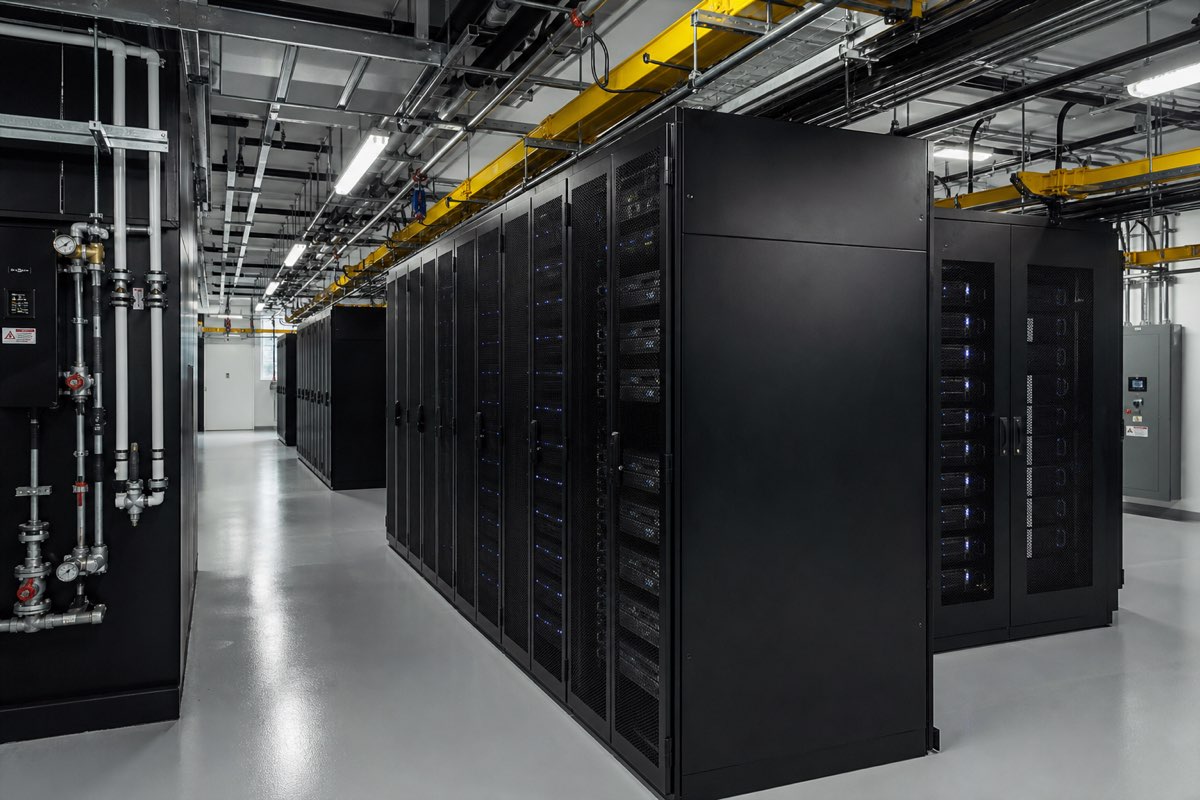
In a data center, temporary cooling and power are not conveniences, they are insurance against an availability event. Rack inlet and room temperature limits leave little headroom, so a single chiller plant losing capacity can push hot aisles past ASHRAE thresholds in minutes and threaten the uptime commitments written into customer contracts. A rental holds the IT load while the permanent plant is diagnosed or repaired, keeping PUE and white space conditions inside the band the SLA assumes.
Growth between plant phases is the quieter driver. A hall fills faster than the next chiller or switchgear delivery lands, and supplemental capacity bridges the gap so commissioning a new suite does not wait on a long-lead permanent install. Because availability, freight, and tier-rated experience vary by region, we route your request to vetted providers rather than pointing you at a single yard.
- Rack inlet and room temperature limits with very little thermal headroom
- PUE and efficiency targets that supplemental cooling has to respect
- Uptime SLAs where a capacity gap reads as a contractual breach
- Load growth that outruns the next permanent plant phase
Staging redundancy, tonnage, and switchgear before the trailer lands
Mission-critical rentals are scoped around redundancy, not just raw capacity. Telling providers your N+1 expectation, IT load, and condenser-water arrangement up front lets them stage units so a single failure inside the temporary plant does not cascade to the floor. Tonnage has to pair with the right heat-rejection path, which is why rental chillers and supplemental tower capacity are usually quoted together rather than as separate line items.
On the power side, generator paralleling, switchgear, and fuel logistics belong in the scope from the start, along with commissioning and load-bank verification before any IT load transfers. Tier ratings, EPA emissions compliance, and liability coverage sit with the third-party providers, so share your documentation requirements early and the qualified ones will build commissioning records and as-installed paperwork into the job.
- N+1 redundancy staging sized to your IT load, not nameplate alone
- Chiller tonnage paired with matched condenser-water and tower capacity
- Generator paralleling, switchgear, and emissions-compliant fuel logistics
- Load-bank commissioning and mission-critical documentation from the providers
Widening the pool to providers who speak uptime
Not every rental yard understands tier-rated infrastructure, concurrent maintainability, or the documentation a colo audit expects. We route your request to providers who do, so the conversation starts at redundancy strategy and commissioning rather than at basic specs. And because we don't own a single unit, there's no yard of our own to clear, so we point you to the chiller that fits your load, not the one we need gone. A marketplace widens that pool past whoever happens to sit nearest your site, which matters most when a heat wave or regional outage has stocked yards quoting against each other.
The specs you supply decide how fast a strong match comes back. IT load in kilowatts or tons, your N+1 or 2N expectation, available fuel and electrical capacity at the curb, and your documentation and tier requirements let providers quote a unit you can actually run. Response times vary by location and provider availability, so the more complete the request, the less back-and-forth before a usable quote.
- Routing to providers fluent in uptime SLAs and tier-rated design
- A wider pool than the single nearest yard, especially during regional demand spikes
- IT load, redundancy target, and curb utilities as the specs that speed a match
- Tier and documentation requirements stated up front for a cleaner quote
When data centers call us in
The primary chiller plant drops
When your primary chiller plant fails, the chilled water that pulls heat off the racks, the cold loop the whole white space rides on, stops moving, and inlet temps climb toward thermal shutdown. This is where knowing the right providers pays off. We go straight to vetted providers who stage trailer-mounted and water-cooled chillers in the 200 to 2,000 ton range, and we push to get supplemental tonnage moving before a hot aisle becomes a tripped SLA. Supplemental rental tonnage at that scale is a planned, known cost, often four to five figures a month, weighed against an SLA breach you cannot price back after the fact.
A chiller overhaul or tower repack is on the calendar
When the work is planned, the win is holding full cooling through it with a spare in reserve. We line up vetted providers to cover the window with redundant capacity, the N+1 spare you're supposed to always carry, so a scheduled job never costs you uptime.
You're pulling a transformer or running a load test
Temporary power for this kind of work can run 500 kW to 2 MW, with switchgear and clean fuel logistics. We route it to providers who've done critical-facility power and can tie units together to share the load, what they call paralleling, so the IT load never feels the swap.
A heat wave outruns your installed cooling
A heat wave, or a growth spurt between plant phases, can outrun the cooling you have. We coordinate trailer-mounted chillers as supplemental capacity, matched to your real heat-rejection load, so you bridge the gap instead of throttling customers.
Data centers & colocation rentalquestions
Every utility your facility runs on,sourced under one intake.
One spec submission covers boilers, chillers, cooling towers, compressors, and generators. Vendors are matched per vertical to the providers carrying the right equipment for data centers & colocation.
Find providers in your state
We route requests across all 50 states. These are the deep-network states where our vetted provider coverage runs deepest. Response times vary by location and provider availability.
Get matched for data centers & colocation
One intake. Vetted providers. Response times vary by availability.